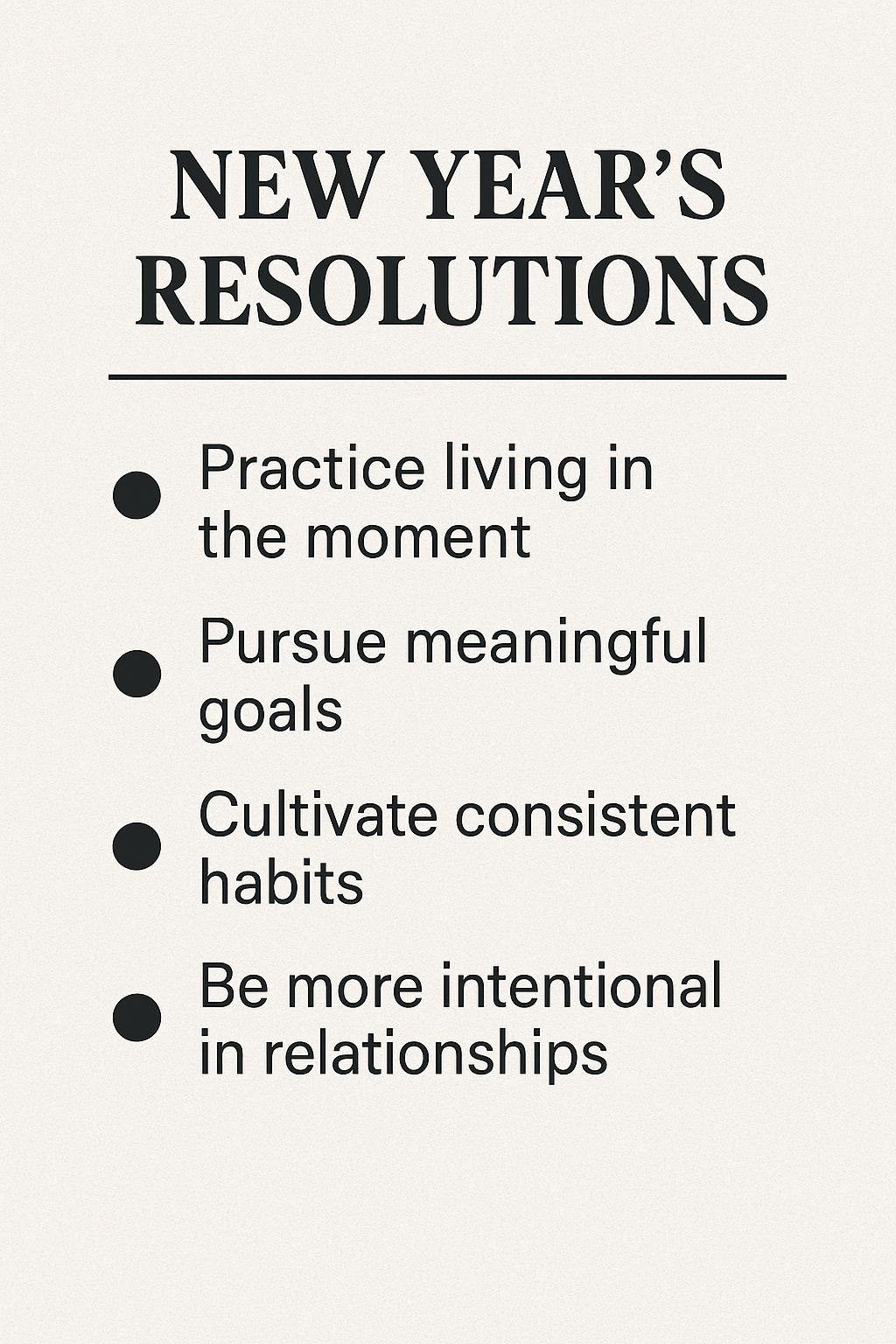
1. Existential Reframing → Practice Present-Centered Living
- Schedule a weekly “joy audit”: list one small thing that make you smile and plan to repeat it.
- Use a mantra or calming phrases like “This matters less than I think” in stressful moments.
2. Anti-Postponement Ethic → Stop Waiting for Perfect Conditions
- Identify one thing you’ve been deferring and take the smallest possible step today.
- Block 30 minutes weekly for something enjoyable—no prerequisites allowed.
3. Challenge Normalization → Embrace Problems as Normal
- Write down your top three recurring challenges and label them “features, not bugs.”
- Create a “problem budget”: allocate mental energy for issues without expecting zero problems.
4. Reflective Self-Inquiry → Structured Year-End Questions
- Set aside 60 minutes for deep reflection using prompts like:
- What would make next year feel successful?
- What would my future self thank me for?
5. Future-Self Minimization of Regret → Long-Horizon Thinking
- Draft a “Letter from 84-Year-Old Me” outlining what matters most.
- Use this lens to prioritize your top three goals for the year.
6. Temporal Feedback Loop → Apply Past Lessons
- Review last year’s biggest mistake and biggest win; extract one guiding principle for this year.
- Keep a “Lessons Log” updated quarterly.
7. Capacity Realism → Plan with Finite Resources
- For every new goal, write down what you’ll stop doing.
- Use the rule: Add only if you subtract.
8. Subtractive Strategy → Trade-Off Planning
- Create a “Stop List” alongside your “Start List” for habits and projects.
- Audit your calendar monthly for low-value commitments to eliminate.
9. Consistency Safeguards → Build Resilient Habits
- Adopt the “Never Miss Twice” rule: track streaks and reset immediately after one miss.
- Use habit trackers with gentle reminders, not punitive alerts.
10. Relapse Expectation → Pre-Plan Recovery
- Write a “Reset Protocol” for each habit (e.g., gym: schedule next session within 24 hours).
- Normalize slips by journaling what triggered them without self-criticism.
11. Metric Recalibration → Redefine Success
- List your hidden metrics (peace, health, relationships) and track them weekly.
- Set one non-work goal equal in importance to your career goals.
12. Productivity Perception Bias → Combat Feeling Behind
- Start each day with: If I could only do one thing today, what would it be?
- End the day by noting one meaningful win, however small.
13. Singular Daily Focus → Prioritize High-Leverage Action
- Use the “One Big Thing” method: pick the most impactful task and do it first.
- Block 90 minutes for deep work before checking email.
14. Action Clarity and Skill Gaps → Remove Friction
- Break tasks into micro-steps: define the next physical action.
- If stuck, ask: Do I lack clarity or skill? Then Google or seek help immediately.
15. Transitional Solitude → Normalize Isolation During Growth
- Schedule one social activity weekly to ease loneliness.
- Journal feelings of discomfort as evidence of progress, not failure.
16. Emotional Literacy → Practice Healthy Expression
- Use a daily “emotion check-in”: name what you feel without judgment.
- Try a 10-minute mindfulness session focused on observing emotions.
17. Relational Stability Criteria → Choose Wisely
- Define three non-negotiable traits for a partner (e.g., emotional regulation).
- Reflect: Am I embodying what I seek? Adjust accordingly.
18. Intrinsic Worth over External Tokens → Anchor Self-Worth
- Write down five qualities you value in yourself unrelated to achievement.
- Limit social media comparison by setting app timers.
19. Behavioral Hygiene → Implement High-ROI Habits
No phone in the bedroom: charge it outside.
- Morning sunlight walk (5–10 min).
- Delay caffeine for 90 minutes.
- Post-meal walk (10 min).
- Alcohol break for 3–6 months.
20. Deliberate Quietude → Create Space for Inner Guidance
Block 30 minutes weekly for silent reflection—no screens, no input.
- Use this time to revisit your goals and ask: Does this still feel aligned?